After Lulayisu
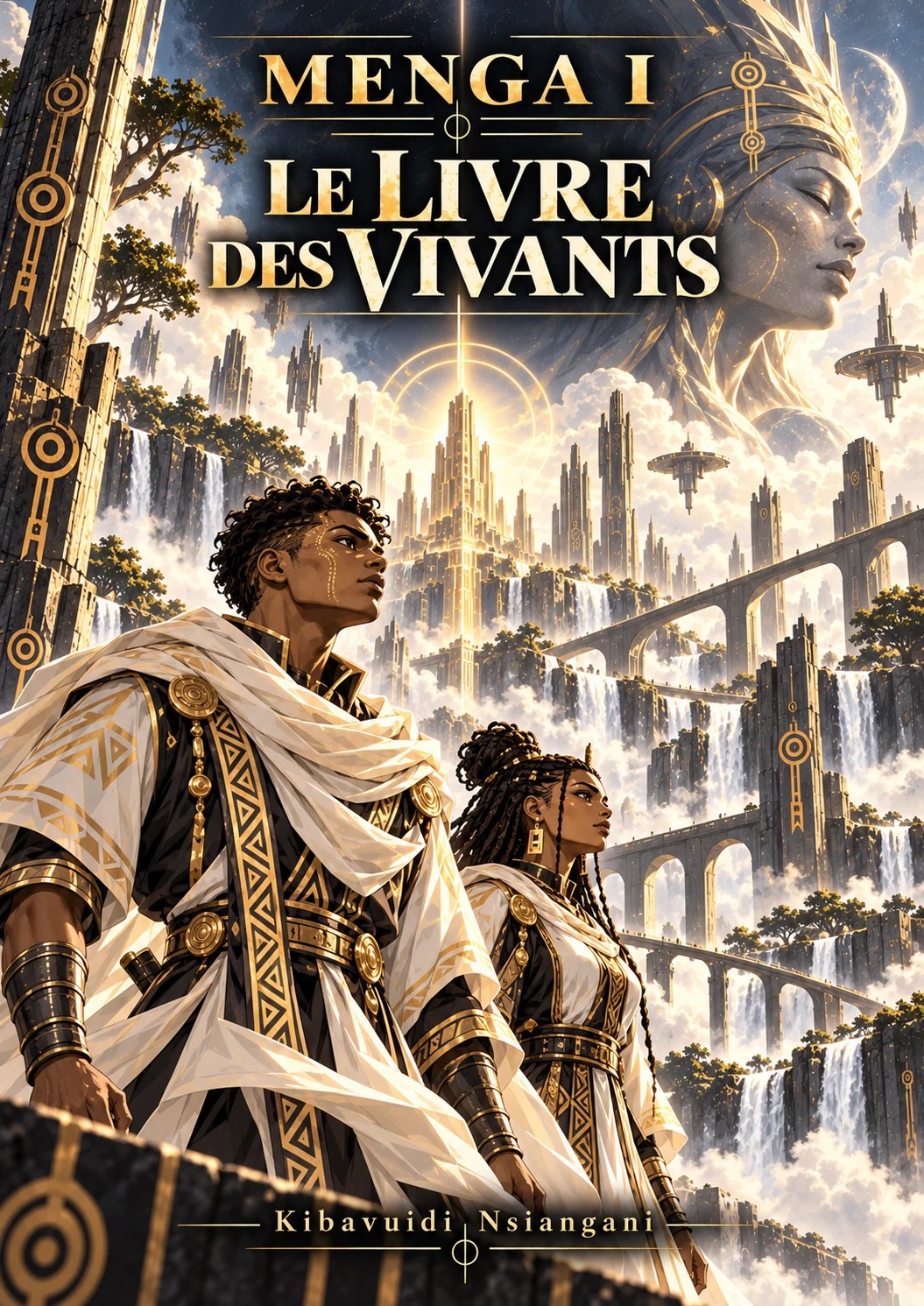
The monster had one eye, one arm and one foot.
Tuti said it was wrong.
Nkele stopped the little wooden figure halfway across the improvised stage.
“Which part?”
“All of it.”
The children laughed.
Nkele lowered the monster.
“You have seen Kinkuma, then?”
“No.”
“Excellent. That makes you an expert.”
More laughter.
Tuti folded his arms.
“You’re making him look like Ne Nlaza Mavungu.”
Someone among the adults called out:
“Perhaps because he was Mavungu.”
Three voices objected at once.
“He was not.”
“In your mother’s version.”
“My mother knew the old account.”
“Your mother also said Kinkuma ate children who lied after sunset.”
“Only the ones who lied badly.”
Nkele waited for the argument to grow by itself.
Before he even took up his staff, he had spent almost an hour pretending he would tell no story at all. He moved benches, tasted sauces, asked children why they always chose to run exactly where adults were carrying dishes, then denied ever agreeing to be the storyteller. Everyone knew he was lying. Nkele told stories better after first pretending he did not want to tell them.
From the veranda, New Kongo was not a political abstraction. It was the woman selling cakes who shouted louder when convoys passed. It was the keeper of the pool who claimed to know every child and still confused Tuti with an older cousin. It was the Mbenza line in the distance, visible on certain nights like a bright seam stitched into the sky. The children did not see “twelve lineages.” They saw the house where the best juice was served, the one where everyone had to remove their shoes, the one where a grandmother demanded your genealogy before allowing you to eat.
The old woman sitting near Nkele counted the children.
She stopped at thirteen.
Nobody noticed her hesitation.
She counted again, more slowly.
Twelve.
Kieleka by the outer column, where he could see both entrances. Diya with a closed book beneath one hand. Tuti already impatient for the story to begin. Nzitani on the floor, trying to peel a fruit without tearing the skin.
Twelve.
The old woman looked at the empty place beside Nzitani.
Nothing.
Yet a moment earlier her body had known that a child was there.
Kieleka built things while he listened. Beside his cup lay a little bridge made from three fruit stems and a piece of salvaged copper wire. Tall for his age, lean, his shoulders calm only in appearance, he kept returning to the joints of the model. When someone asked his opinion, his thumb passed once over the joint of his index finger. Then came, more often than not, a question:
“What do we know exactly?”
Tuti claimed he did it to make problems more difficult. Kieleka never corrected that version.
Diya kept one finger between the pages of her closed book. An indigo strip held her hair with just enough carelessness to show she had tied it without a mirror. In the pocket of her long jacket, a dismantled dial, two wires and a piece of chalk clicked together whenever she moved. She liked experiments that contradicted her notes, provided she could discover why. Her most common sentences were short: “Always?” “Within what frame?” “How do you know?”
Tuti had turned two fruit stones into game pieces and moved them along the lines of the paving. More compactly built than Kieleka, chin often lifted, he liked games in which someone had to lose before the rule revealed something. When adults walked around a question, he removed the detours:
“No. Why?”
Or simply:
“And then?”
Nzitani, the smallest, had pockets that were always too full: a smooth stone, a red thread, the vein of a leaf, two beads she claimed she would return one day. She preferred sitting beside people rather than facing them. When an answer did not really answer, she waited several seconds and then asked exactly the same question again.
A chair slightly outside the circle remained empty. Nobody had reserved it. Two cousins approached it, looked at one another, then chose somewhere else without knowing why.